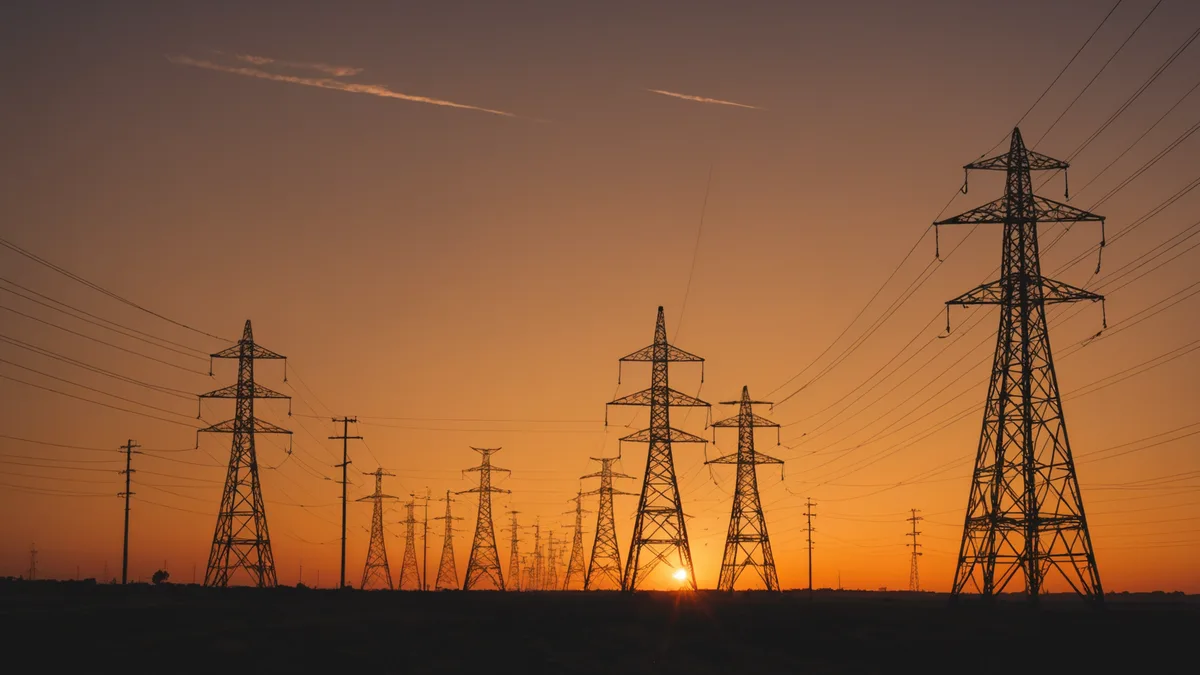
Every utility operator we talk to has a version of the same story. They have a stretch of transmission corridor, maybe 40 towers, that they know needs closer inspection. One section runs through difficult terrain. Two others have structures showing early rust staining visible from the ground. The inspection contractor gives them a quote for a rope-access team. The lead time is six weeks. The weather window is narrow. And when the crew finally goes up, they cover the accessible faces of 28 of the 40 towers, flag nine areas for follow-up, and the follow-up job goes back into the queue.
That gap between what needs inspecting and what actually gets inspected is not a people problem. It is a structural limitation of sending human beings up steel in wind. Autonomous climbing robots change that constraint directly, and the shift is happening faster than most inspection program managers expected.
Where Rope-Access Inspection Has Reached Its Ceiling
Rope-access tower inspection is the dominant method for detailed close-up examination of transmission steel for good reason: it is the only human-viable way to reach specific joints, bolt seats, and interior angles that ground-level or aerial survey cannot resolve. Trained rope-access teams produce genuine visual data. The method has a defensible safety record under proper certification, including SPRAT and IRATA standards in North America and Europe respectively.
But the method has three structural limits that are getting worse, not better, as tower fleets age and inspection cycles compress.
First, the labor supply is thinning. The pipeline of trained industrial rope-access technicians with power infrastructure certification is not growing in line with demand. Utilities competing for the same pool of qualified climbers are seeing longer lead times and higher day rates. A crew that could be scheduled four weeks out in 2021 now books six to ten weeks out in many regions, particularly for rural corridor work where travel time adds to cost.
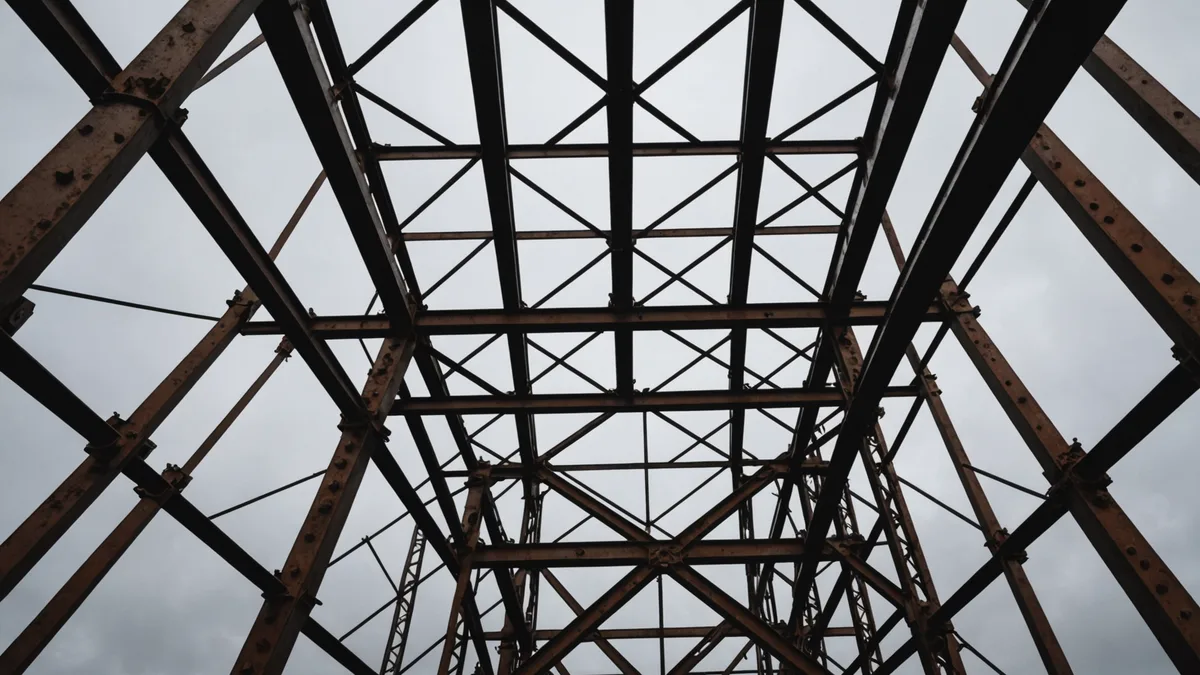
Second, human reach on a tower has hard geometric limits. The most inspection-critical areas on aging lattice steel are often the hardest to reach: interior angles of primary members, undersides of cross-members, the interface between a steel angle and its base plate where moisture pools and galvanic corrosion concentrates. A rope-access technician hanging from above cannot easily get a flashlight and camera into a recessed joint 15 meters below the attachment point. Coverage notes in inspection reports often document this honestly, with language like "access limited to exterior faces of primary verticals."
Third, weather dependency compounds scheduling delays. A single-day weather hold on a rope-access job is not a single-day delay. It pushes the crew to another client, resets the contractor schedule, and adds weeks to the rebook. In regions with compressed usable-weather windows, that can mean a planned annual inspection stretches to 18 months between visits.
What the Robot Actually Changes
An autonomous climbing robot addresses each of these constraints differently. The labor dependency is gone at the point of the climb itself. One operator deploys the robot at the tower base, sets the mission parameters, and the robot executes the run. That operator does not need rope-access certification. The bottleneck shifts from specialized climber availability to robot platform availability, which scales differently.
Geometric coverage improves because the robot climbs the lattice rather than hanging from it. Magnetic and mechanical grip systems let it approach interior angles, undersides, and compressed member sections from the member surface directly. It can hold position in that geometry long enough to capture quality imagery, where a human would need to be rigged into a specific position in advance.
Weather still matters, but the threshold is different. A robot operating on a tower below roughly 50 km/h sustained wind load faces mechanical challenge, not safety risk to personnel. The operator call is about inspection data quality, not crew exposure. That changes the decision calculus meaningfully, particularly for the borderline days that currently idle rope-access crews entirely.
The Economics Are Not Simply Cost-Per-Tower
When utilities first look at autonomous inspection, the conversation usually starts with a cost comparison: what does a rope-access inspection cost per tower versus what does a robot run cost per tower? That framing misses most of the real economics.
The cost-per-tower number from a rope-access contractor covers the direct inspection event. It does not include the six-week scheduling lag, the internal coordination cost of managing that lag, the deferred maintenance decisions during the backlog period, or the coverage gaps that accumulate when difficult sections get marked "limited access" and carried forward. When utilities start accounting for those factors, the comparison changes substantially.
A more useful frame is inspection-program throughput: how many tower-sections per year can a utility inspect to a defined coverage standard? With rope-access, that number is constrained by climber availability and weather. With robot platforms, it is constrained by platform availability and deployment logistics. The latter constraint is more elastic. You can add another robot; you cannot easily add another certified rope-access crew in four weeks.
What Robots Are Not Yet Good At
We should be direct about the limits here. Autonomous climbing robots are not a drop-in replacement for every rope-access application.
Some defect assessments still require a trained technician's judgment at close range: tap testing for delamination, tactile assessment of corrosion layer depth, evaluation of a weld that shows visual ambiguity. An imaging robot captures what its sensors can see and classify. If the inspection standard requires a finding to be tactilely confirmed or sampled, the robot generates the priority list but a human still closes the loop on specific items.
Tower geometry also varies more than manufacturers drawings suggest. Older lattice structures have non-standard member configurations, field repairs, and retrofitted hardware that a robot trained on standard geometry may not navigate optimally. This is a solvable problem, but it requires site-specific mapping and validation that adds to deployment setup time on unusual structures.
The transition we are seeing in the industry is not "robots replace rope-access crews entirely." It is "robots handle the baseline inspection runs, and rope-access crews handle the targeted follow-up items that robots flag." That division keeps rope-access work focused on the highest-value tasks, reduces crew exposure on routine traversals, and improves the information quality going into follow-up decisions.
What the Shift Looks Like Operationally
A utility running an 80-tower transmission corridor today might send a rope-access team through the full corridor on a roughly annual cycle, with spot inspections triggered by aerial patrols showing visible anomalies. The robot-augmented version of that program looks different: robot runs quarterly or semi-annually across all 80 towers, with continuous imaging data feeding a defect tracking database. Rope-access teams are dispatched to the 8 to 12 towers where the robot flagged specific items requiring close examination or physical confirmation.
The inspection data density improves significantly. Instead of one close-up visit per year producing a written report, you get quarterly imaging runs with geotagged defect records and trend data showing how a flagged pit has changed over 90 days. That time-series information is genuinely new for most utility inspection programs. It lets maintenance planners make earlier intervention decisions on components that are deteriorating faster than expected, rather than finding the advanced-stage version of the problem at the next annual visit.
This is the argument that resonates most clearly with infrastructure maintenance managers: not a cost reduction claim, but a shift in inspection data quality and frequency that lets them run their maintenance program more precisely.
Where the Industry Is Now
The inspection robotics space is early but not experimental anymore. Several robot platforms designed specifically for transmission tower inspection have reached the point of field-validated operation. The next 24 to 36 months will see the question shift from "does this technology work on towers" to "how do utilities integrate it into existing inspection program structures and reporting frameworks."
That integration question is not trivial. Inspection reports generated by autonomous robots look different from rope-access inspection reports. The defect taxonomy, the severity tiering, the geographic referencing all need to map onto the utility's existing asset management system. Getting that mapping right is as important as the robot's sensor performance, and it is where most deployment projects spend the most time.
For utilities planning their 2027 and 2028 inspection programs, the case for beginning that integration work now is straightforward. The learning curve on program integration is longer than most assume, and the utilities that start working through it early will have a meaningful operational advantage over those that wait.